Case Study: UX Research & Product Design
Enhancing Movement for Students
A prototype for the MBus system to reduce stress and deliver a seamless, schedule-aware transit experience for University of Michigan students.
UX Research
Product Design
Client
University of Michigan
Timeframe
Sept 2024 – Dec 2024
Role
Ideation, Wireframing, User Research, Design, Prototyping
Team
UofM Faculty, 4 UXRD
Tools


Impact From the Project

Students found the features from the prototype useful, including the routes.

Called out the flaws of the system, such as no feedback options.

The prototype was met with acclaim from the faculty and class.
Problem
How do we reduce transportation stress for students?
How do we reduce transportation stress for University of Michigan students by integrating class schedules, enabling real-time bus tracking, and providing meaningful feedback tools to improve daily commutes?
Research & Insights
Interviews, personas, and information architecture
Interview Method
Virtual interviews via Zoom with current and former UofM students (undergrad and graduate, in- and out-of-state), analyzed with Google Docs and Miro.
Improve Connection
Integrate bus schedules with the bus system.
Access to Information
Give students accurate bus information to reduce wait times and improve punctuality.
Provide Feedback
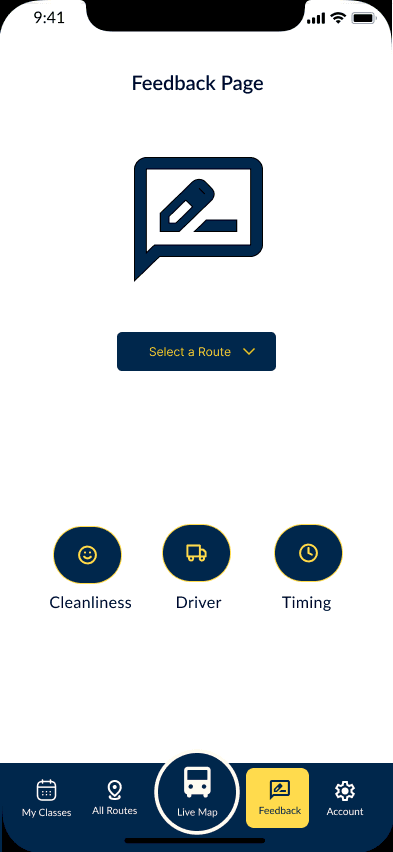
Give students opportunities to give feedback and optimize daily commutes.
Persona
Developed user personas representing key audience segments, each grounded in distinct motivations, behaviors, and pain points, helping prioritize decisions that support intuitive onboarding, emotional resonance, and long-term engagement.
Information Architecture
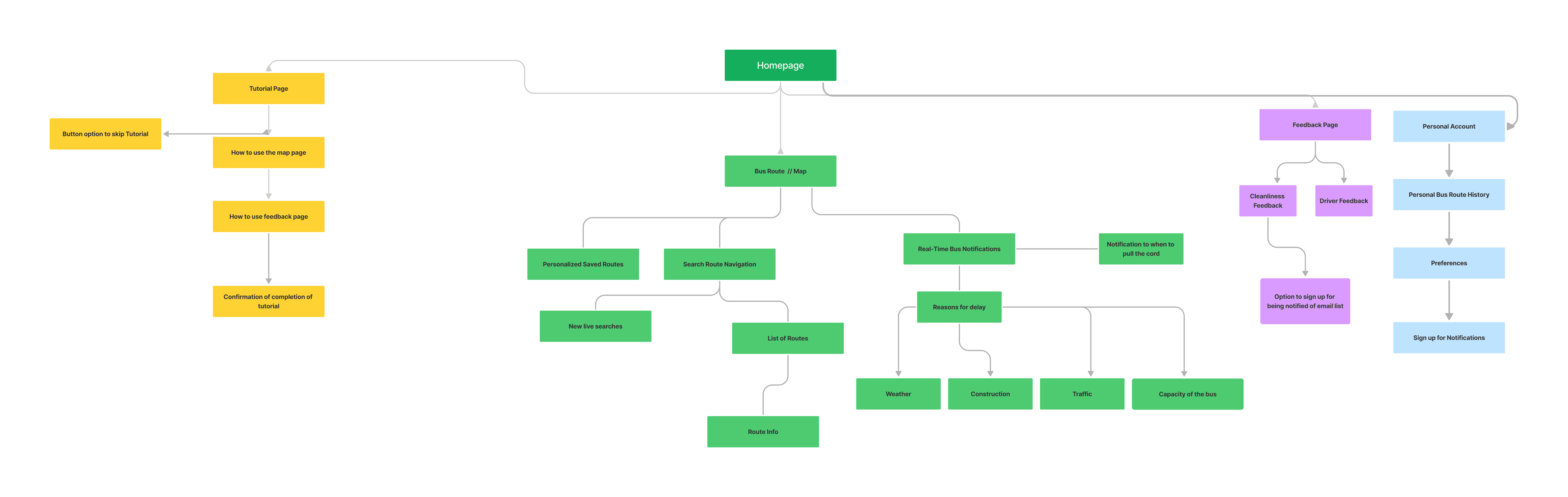
Design Strategy and Execution
From lo-fi to hi-fi, keeping onboarding simple
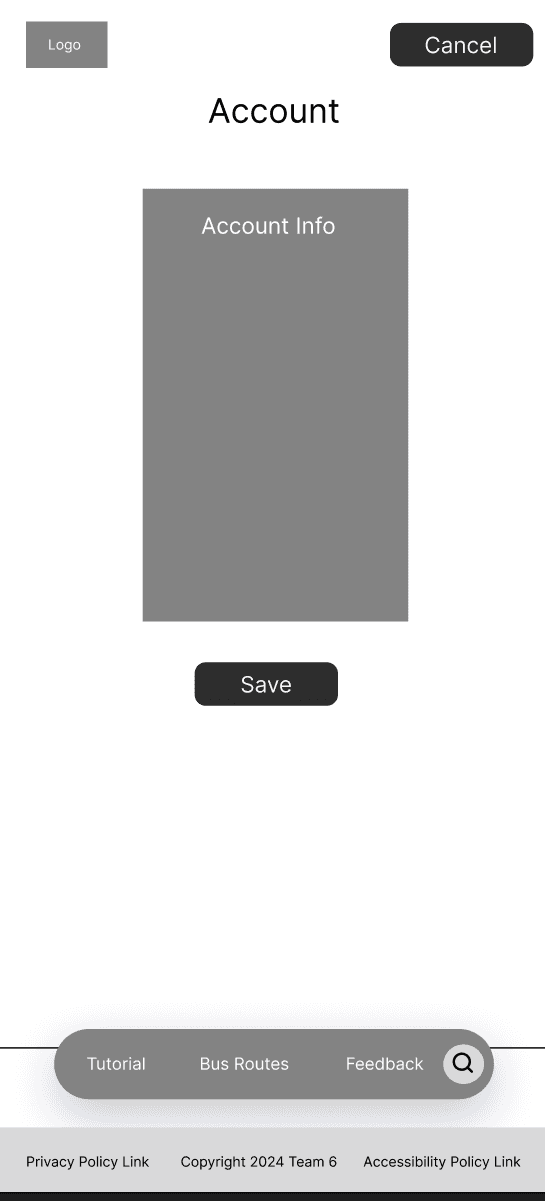
Lo-Fi Wireframe
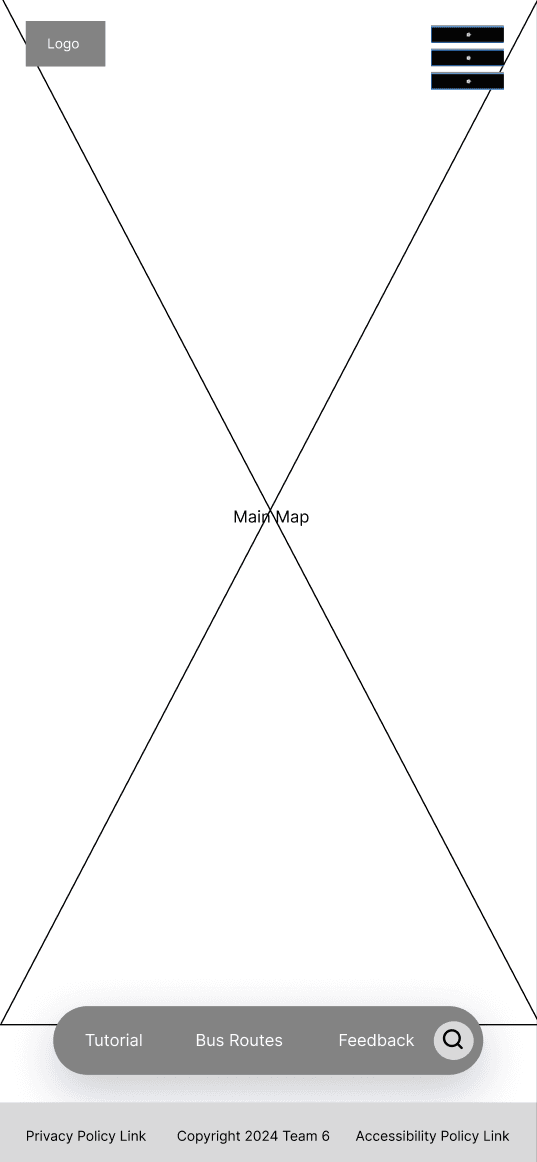
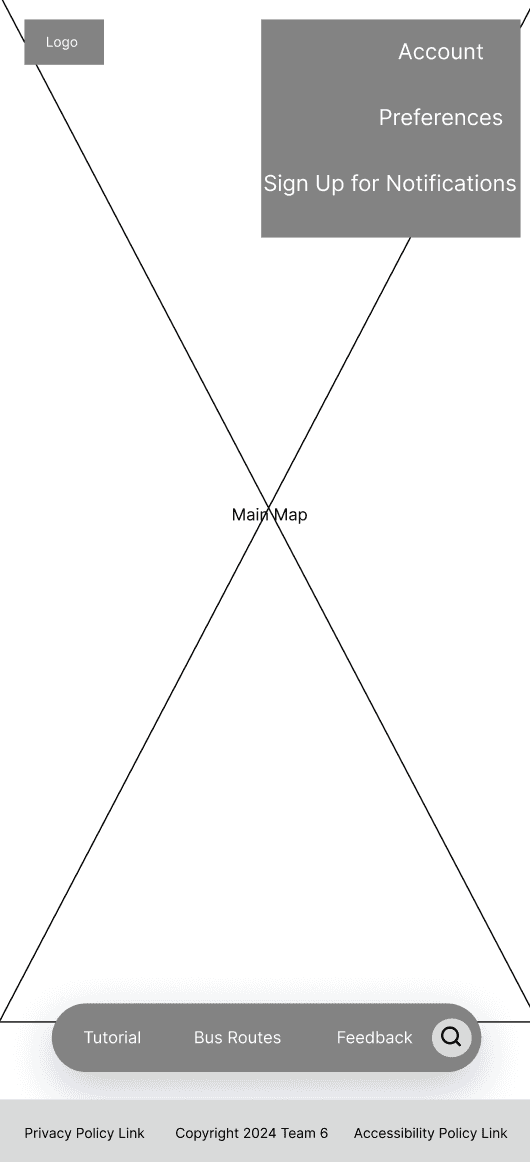
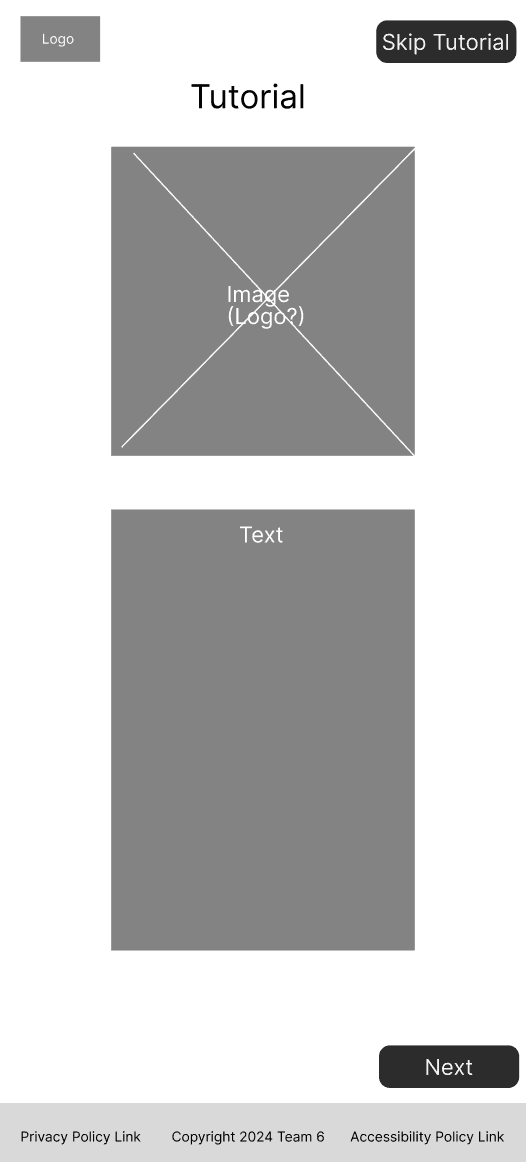
Mid-Fi Wireframe
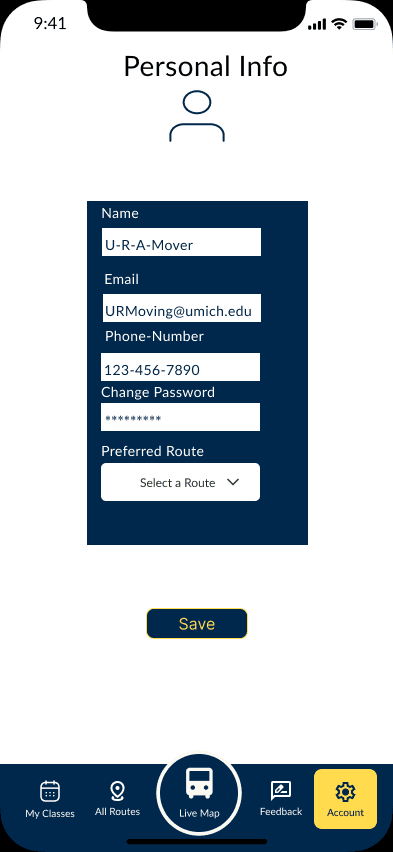
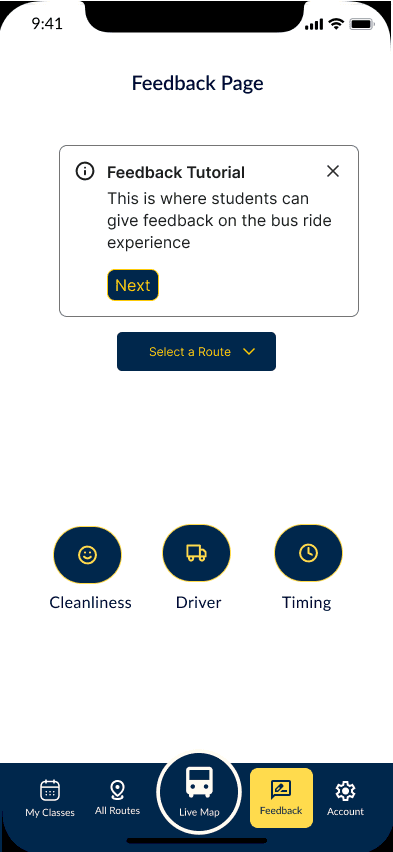
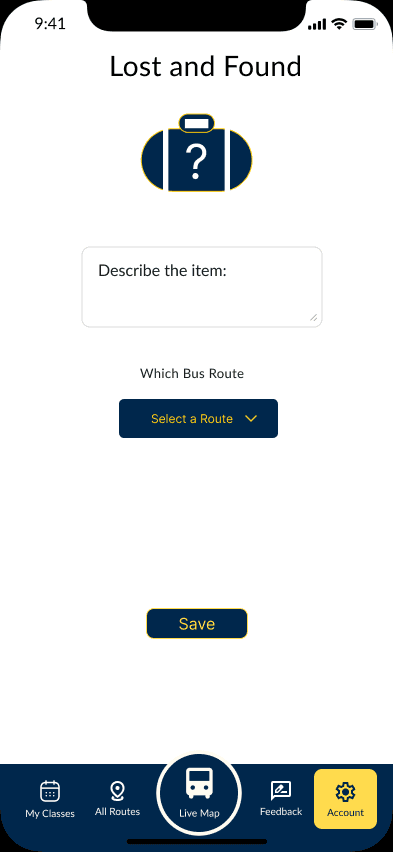
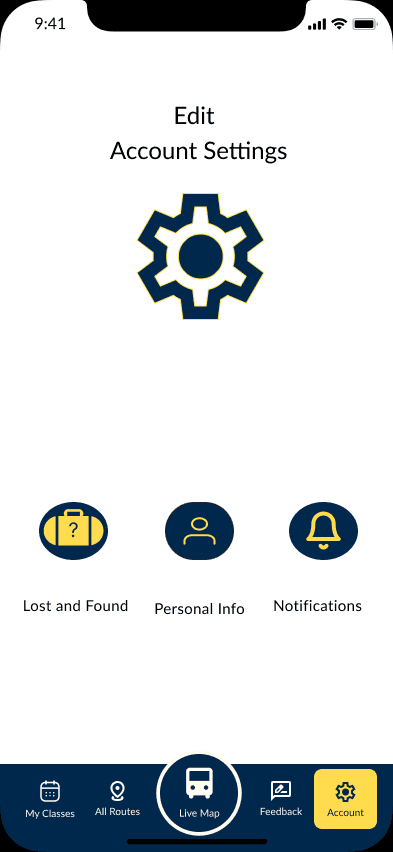
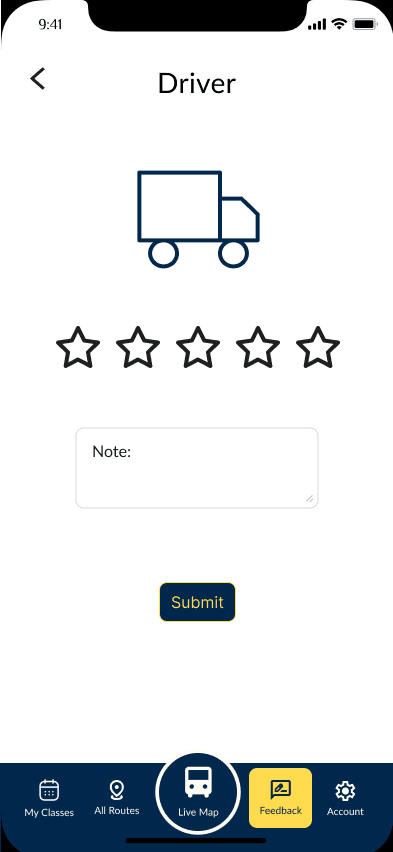
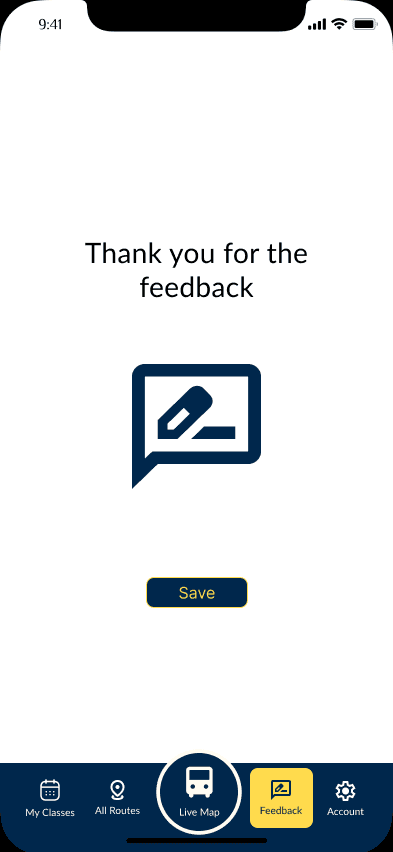
We kept the account and feedback pages simple and user-friendly to avoid unnecessary complexity; students don’t want a complicated system to learn on top of school.
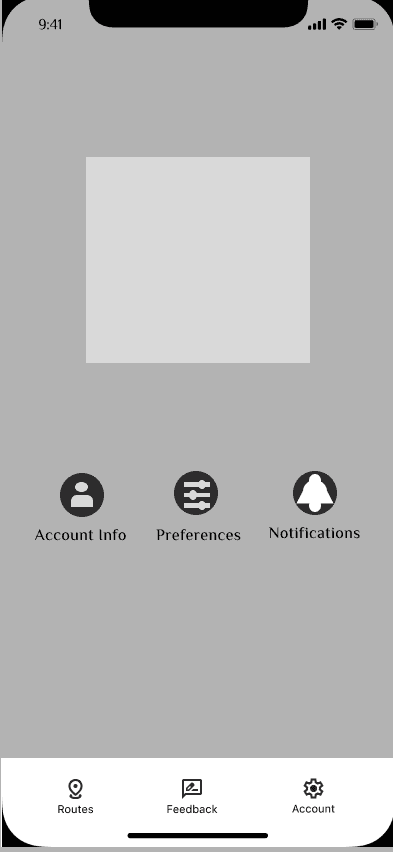
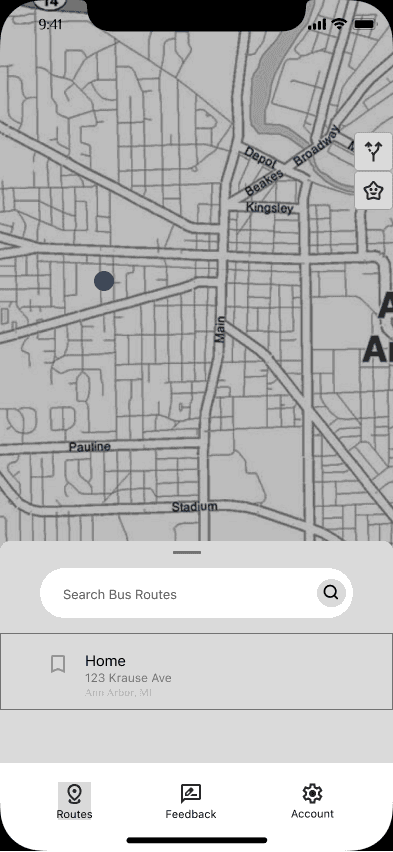
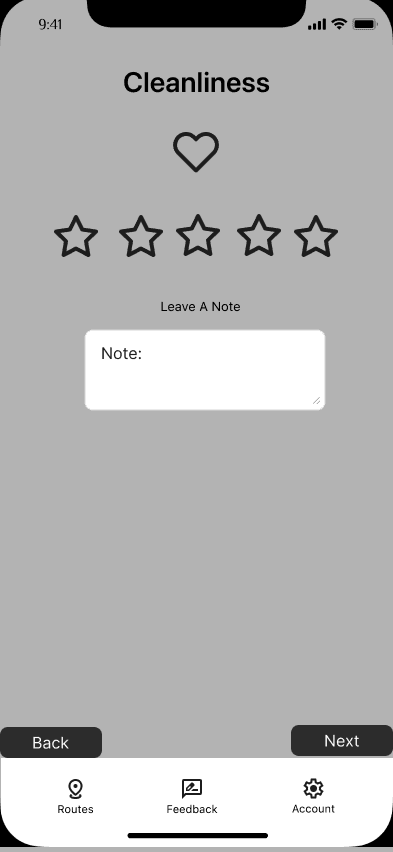
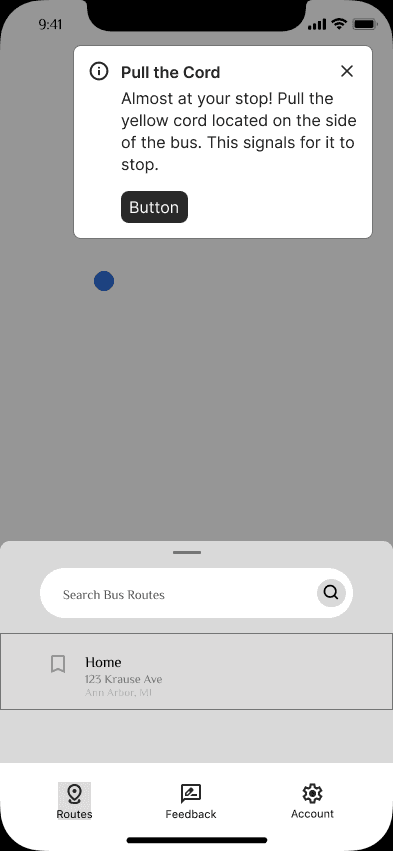
Hi-Fi Wireframe
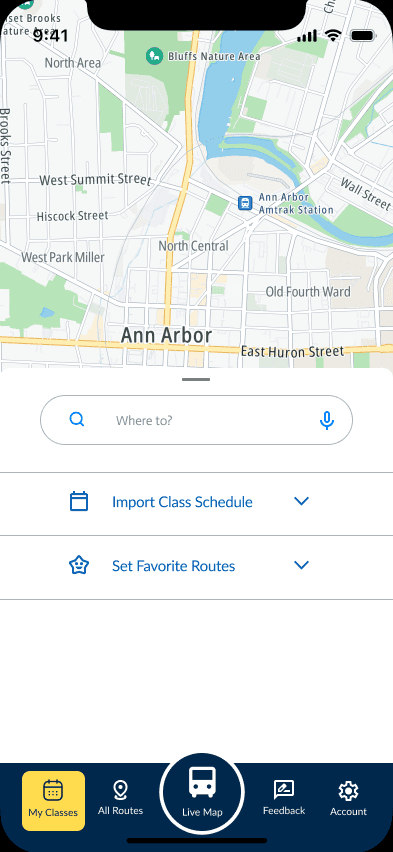
Testing & Iteration
What testing revealed
Tutorial
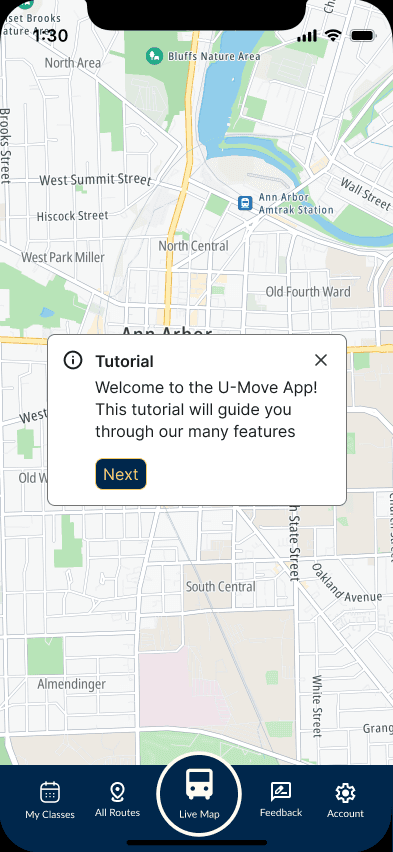
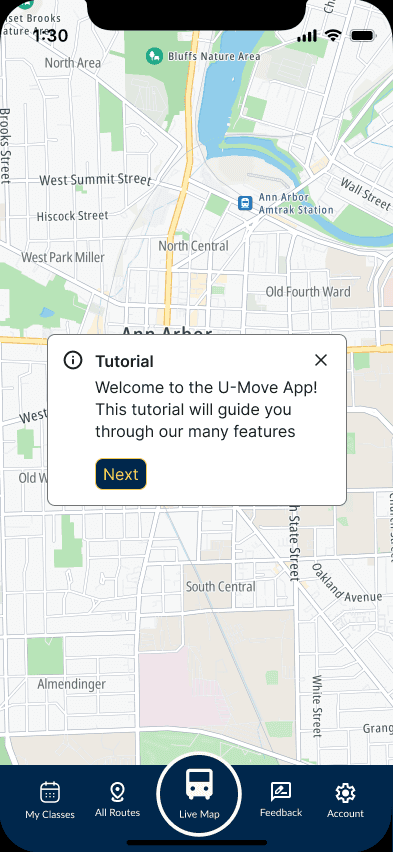
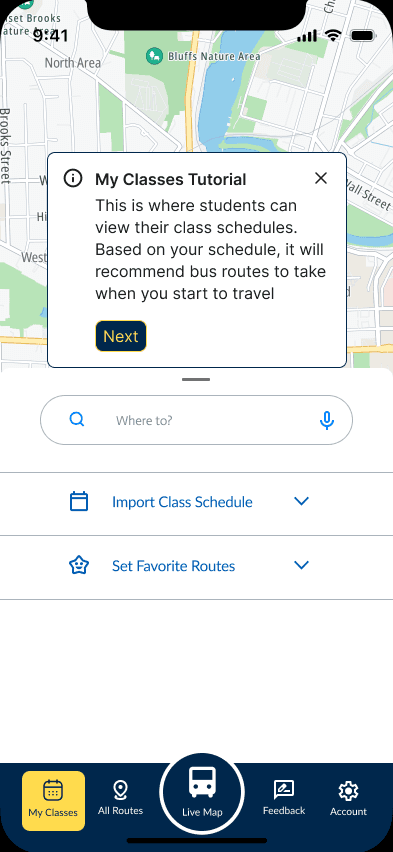
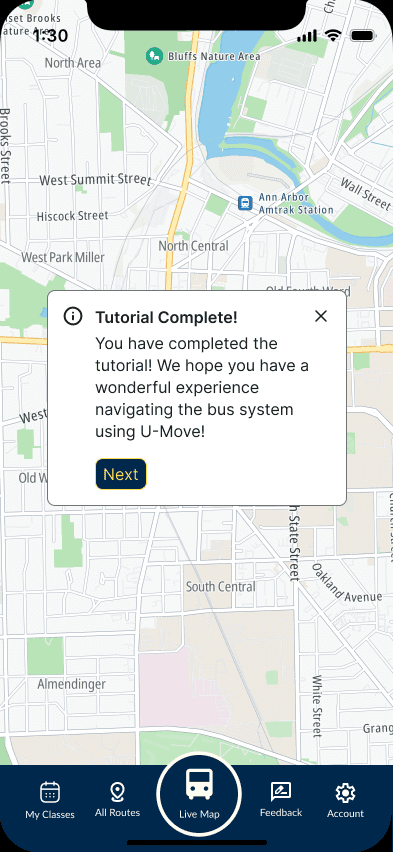
Participants consistently indicated the tutorial lacked sufficient clarity, underscoring the need for more explicit step-by-step instructions to reduce confusion.
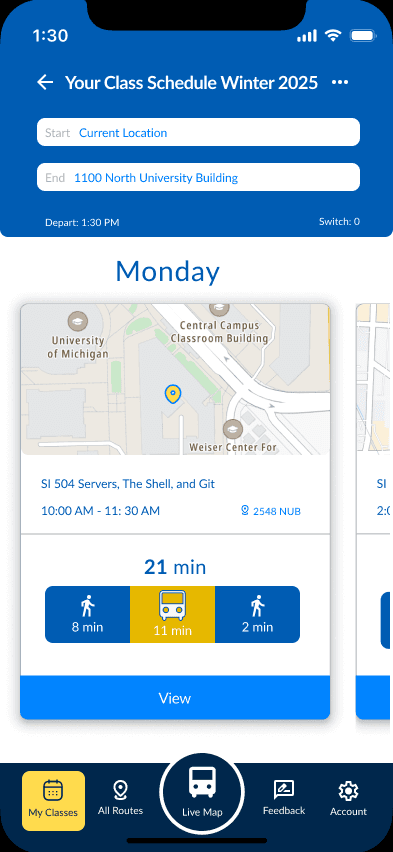
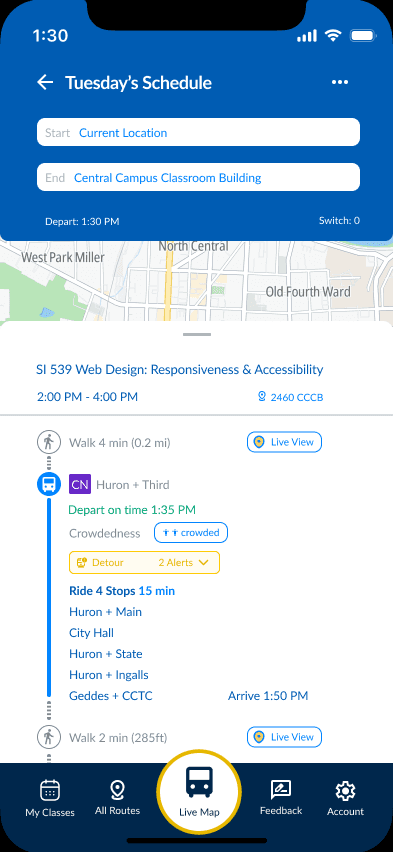
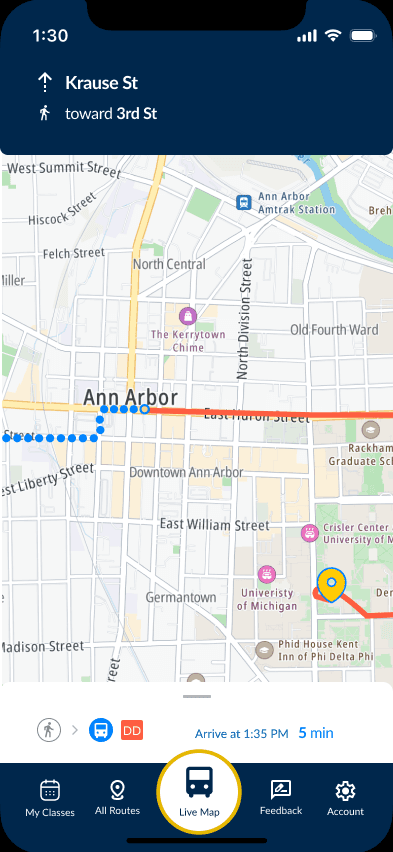
Route Setup
Feedback & Account System
Closing the loop on feedback and personalization
Participant feedback highlighted that the account system needed stronger personalization features, underscoring the importance of tailoring account settings and feedback mechanisms to enhance engagement and reduce friction.
Impact
Positive
Accessibility
Makes it easier for all students to access and understand the campus bus system.
Pollution
Encouraging more students to take the bus can help reduce traffic and lower emissions.
Navigation
Real-time route and schedule information helps students navigate campus efficiently.
Potential Negative
System Abuse
Unwarranted negative feedback could lower a route’s score and affect driver morale.
Emotional
Receiving harsh comments may upset drivers, even when the criticism isn’t justified.
Driver Impact
Some users might misuse the feedback feature to leave unfair or excessive criticism.
Key Takeaways
User Empathy Matters
Feedback & Guardrails
I discovered that open feedback channels need thoughtful moderation to prevent misuse and protect team morale.
Small Changes, Big Impact
Isaac Tung was part of a 4-person UXRD team designing a transit prototype for University of Michigan students.